

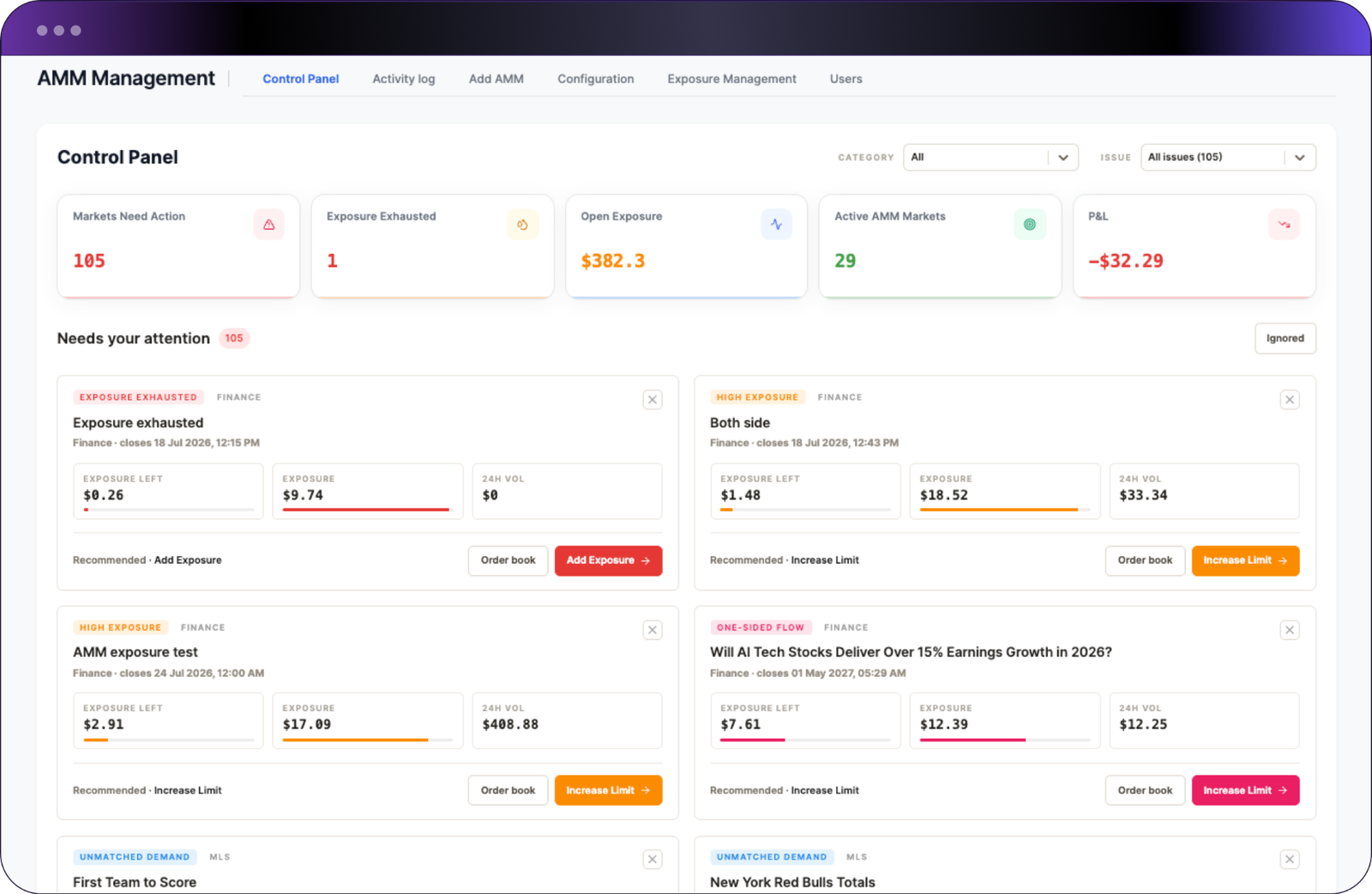
But building a prediction market from scratch is not easy. It requires trading infrastructure, market management, user accounts, payment systems, real-time data, risk controls, and a lot of ongoing development.
This is where a white label prediction market platform can make a difference.
Instead of spending months or years developing the technology yourself, a business can use an existing platform, customize it with its own branding and business requirements, and launch its prediction market much faster.
What Is a White Label Prediction Market?
A white label prediction market is a ready-made prediction market platform that a company can launch under its own brand.
The technology provider manages the core platform, while the business can customize elements such as:
- Brand name and logo
- Website design
- Market categories
- User experience
- Trading rules
- Fees and commissions
- Payment options
- Admin controls
- Market creation and settlement
- Data and third-party integrations
In simple terms, you don’t have to build the entire system from the ground up. You start with an existing technology framework and adapt it to your business.
How Does a Prediction Market Work?
The basic idea is straightforward.
Users trade contracts based on the possible outcome of a future event. For example:
“Will Team A win the championship?”
If a user believes the answer is yes, they can take a position on that outcome. As the market develops and new information becomes available, prices can change.
Once the event is resolved, the market is settled according to predefined rules.
For businesses, the challenge isn’t the basic concept. The difficult part is creating a reliable platform that can handle the complete process—from creating a market to managing users, transactions, pricing, settlement, and reporting.
That’s why the underlying technology matters.
Why Businesses Choose White Label Solutions
Building a prediction market platform internally can require a significant investment in development, infrastructure, security, testing, and maintenance.
A white label solution can reduce much of that initial workload.
Faster Time to Market
One of the biggest advantages is speed.
A business can begin with an existing platform instead of starting development from a blank screen. This allows the team to focus more on its business model, market strategy, partnerships, and user acquisition.
Lower Development Effort
Developing every component internally means maintaining a large technical team and continuously improving the platform.
With a white label solution, many core components are already available, which can reduce development time and initial technical costs.
Custom Branding
White label doesn’t mean users have to know which technology provider is behind the platform.
The platform can be designed around your brand, visual identity, domain, and user experience.
Flexible Market Creation
Businesses can create markets around the topics that matter to their audience.
Depending on the business model and applicable regulations, these could include areas such as sports, finance, entertainment, politics, technology, or current events.
Scalable Infrastructure
As the number of users and markets grows, the platform needs to handle more traffic, transactions, and real-time activity.
A properly designed solution should be capable of scaling with the business rather than requiring a complete rebuild as usage increases.
Important Features to Look For
Not every white label prediction market platform offers the same capabilities. Before choosing a provider, businesses should look beyond the interface and examine the technology underneath it.
Some important features include:
Market Management
Administrators should be able to create, edit, pause, close, and settle markets from a centralized dashboard.
Real-Time Market Updates
Prediction markets depend heavily on current information. Prices, market activity, and event data should update quickly and reliably.
User Management
The platform should provide tools for managing accounts, permissions, transaction history, and user activity.
Liquidity Management
Liquidity is one of the most important parts of a prediction market. A platform should provide mechanisms for managing liquidity and supporting active markets.
Automated Settlement
Once an event has been resolved, the settlement process should follow clearly defined rules and reduce unnecessary manual work.
Payment Integration
Depending on the business model and jurisdiction, the platform may need to support different payment methods and transaction workflows.
Analytics and Reporting
Business owners need visibility into market activity, trading volume, user behavior, revenue, and other important metrics.
Security
Security should be considered from the beginning rather than added later. User accounts, financial transactions, APIs, administrative access, and platform infrastructure all require appropriate protection.
White Label vs. Building From Scratch
The right choice depends on the business.
Building from scratch gives a company maximum control over the architecture and product roadmap. However, it also means taking responsibility for every part of the development process.
A white label solution provides a starting point that can be customized.
For companies that want to test a business model, enter the market quickly, or avoid the cost of building an entire technology stack internally, white label development can be a practical option.
The key is choosing a provider that offers enough flexibility rather than forcing every customer into exactly the same product.
Who Can Use a White Label Prediction Market?
The technology can be relevant to several types of businesses.
iGaming operators can explore prediction-based products alongside their existing offerings.
Sports organizations and media companies can create interactive experiences around games, competitions, and events.
Financial and fintech businesses can explore event-based markets where permitted by local regulations.
Entrepreneurs and startups can use a white label platform to validate a new prediction market concept without building the entire infrastructure themselves.
Brands and communities can create prediction-based experiences designed around their particular audience.
The business model and permitted market categories will, of course, depend on the laws and regulations applicable to the target market.
What About Regulation?
This is one area businesses should not overlook.
Prediction markets can be subject to financial, gaming, gambling, consumer protection, or other regulations depending on the jurisdiction, product structure, and type of event being traded.
Having a technically strong platform does not automatically make a business legally compliant.
Before launching, businesses should obtain appropriate legal and regulatory advice for every market they intend to serve. The platform should also provide controls that support the operator’s compliance requirements, such as user verification, transaction monitoring, responsible-use controls, geographic restrictions, and audit records where applicable.
How to Choose the Right White Label Provider
Choosing a provider should not be based only on the demo.
Ask practical questions before signing a contract:
- How customizable is the platform?
- Can we use our own branding and domain?
- How does market creation and settlement work?
- What liquidity model is supported?
- Can the platform integrate external data sources?
- What APIs are available?
- How does the platform scale during high traffic?
- What security measures are in place?
- What payment integrations are supported?
- Can we control user access by geography?
- What analytics and reporting are included?
- Who manages infrastructure and updates?
- What support is available after launch?
- Can the platform adapt as our business grows?
The answers will tell you much more about the provider than a polished sales presentation.
The Future of White Label Prediction Markets
The prediction market industry is becoming more interesting as businesses look for new ways to turn information, events, and audience engagement into interactive experiences.
At the same time, users are becoming more comfortable with real-time digital markets and event-based products.
For businesses, the opportunity isn’t simply to launch another website. The real opportunity is to build a product that gives users a reason to return, participate, and engage with events they already care about.
A white label prediction market platform can provide the technology foundation for that journey.
Final Thoughts
Launching a prediction market from scratch can be expensive, time-consuming, and technically demanding. A white label solution provides another route: start with proven technology, customize it around your business, and concentrate your resources on the product and audience.
However, the platform is only one part of the equation. Technology, liquidity, user experience, security, market data, compliance, and a clear business model all need to work together.
For companies considering entering this space, the best approach is to evaluate the technology carefully, understand the regulatory requirements of the target markets, and choose a provider that can support the product beyond its initial launch.
Overview
- Service Type: Financial & Legal




Leave feedback about this